Economic enterprise census – 2019
In July 2018, the State Council of the People’s Republic of China issued a decree to conduct the fourth national economic census (第四次全国经济普查). There is nothing complicated in it, but the documents and materials related to the census use many terms and concepts that are necessary for a basic understanding of the structure of the PRC’s economy. We will elaborate on them in this article. Besides that, we will touch upon the object and goals of the census.
But first things first. Timelines for the census are set as follows:
- August 2018 – preparations for the census begins
- November 2018 – lists and forms for filling are approved, a website is created to fill out materials, brochures and guides are printed
- January 1, 2019 – acceptance of documents from enterprises and organizations begins
- April 30 – collection of information from enterprises and organizations ends
- May 20 – the verification of the information provided by the census authorities ends
- June 15 – the collected information must be submitted to the Census Organizing Group under the State Council of the PRC
- by the end of 2019 – official publication of the census results
So, what are the basic types of enterprises and organizations in the PRC? This determines the forms you need to submit:
法人单位 – a legal entity. Three main features:
- Legally established, with its own name, organizational structure, location and delictual dispositive capacity
- Using (or having the right to use) property, bearing responsibility for this and having the right to conclude contracts with other legal entities
- Recorded in the accounting documentation independently from others
产业活动单位 – an industrial activity unit. Everything is a little more complicated here.
- Carrying out business activities in one specified place or those in which one type of activity is the main
- Carrying out industrial or entrepreneurial activities as an independent organizational structure
- Having the right to keep records of income and expenses as an independent structure
In the census decree, such organizational structures also include:
- Organizations founded in accordance with the requirements of the legislation and in the prescribed manner, but not having civil delictual dispositive capacity
- Organizations created not in accordance with the procedure established by the legislation within the framework of the structure of a legal entity.
行政事业单位 – an administrative unit. This is either an organization of supervision and control, or a proper state body within a ministry or department, or an organization conducting social and public activities. This could be a state-owned university, a street cleaning enterprise, or a trucking company. The main feature of an organization of this type is that the purpose of their existence is not to make profit and they have the authority to issue bylaws and regulations to ensure public welfare and order + contribute to its development.
民间非营利组织 – a non-profit people’s organization. Well, here, too, everything, in principle, is understandable – these are those organizations that do not set themselves the goal of making a profit from their activities.
So, what does the Statistical Committee want to know from us? In my case, we needed to fill out the following forms:
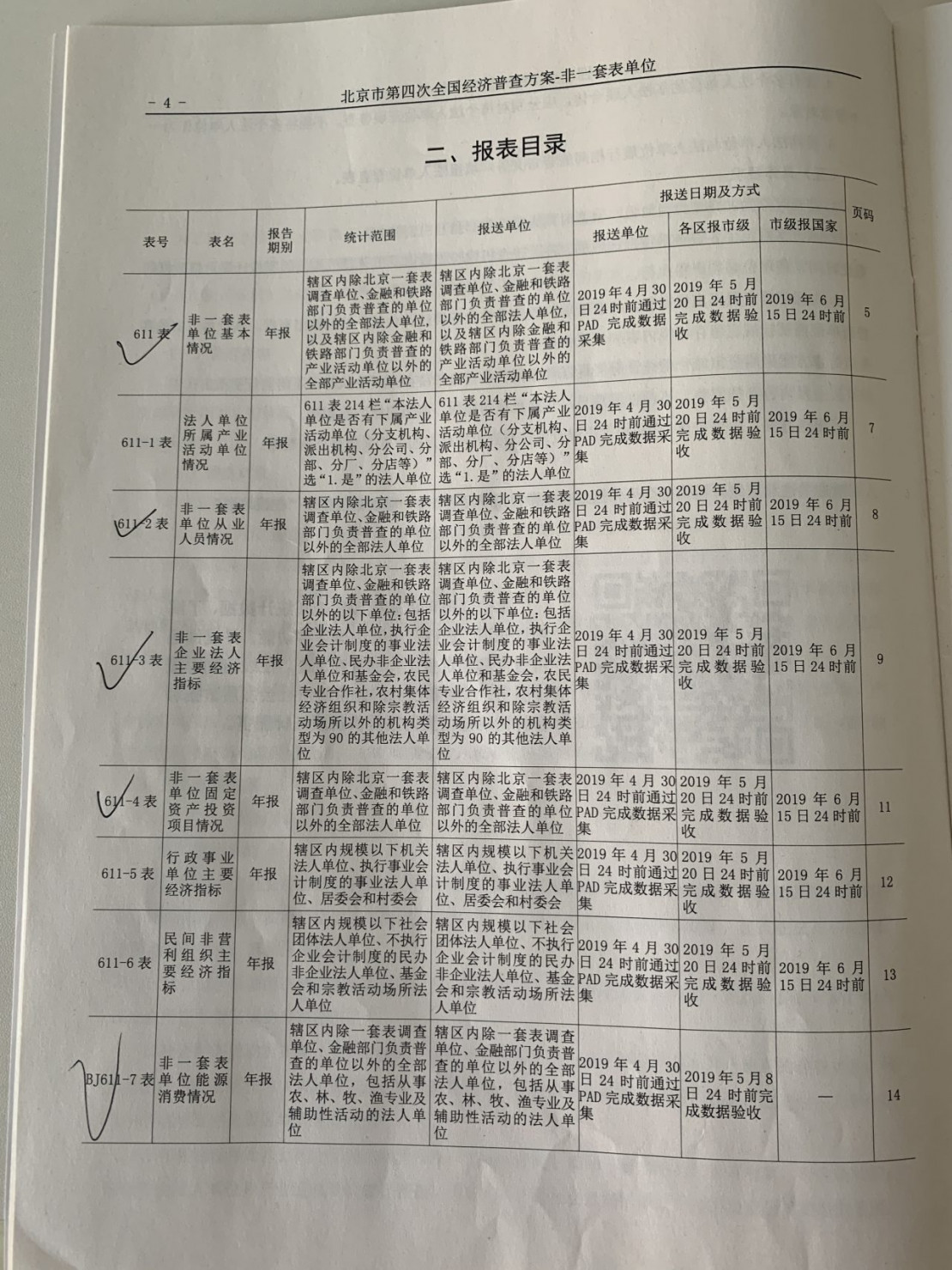
Since most of the forms are quite boring and clear, let’s just dwell on the curious points from each + a short description
Form 611 非一套表单位基本情况 – basic information about the organization – founders, registration address and actual address, existence of stores, and so on. Essentially, this is information from the constituent documents gathered together and a basic description of what the organization does.
Form 611-2 非一套表单位从业人员情况 – information about the employees of the organization. Here the Statistical Committee wants to know the number of women in the organization, the number of workers with higher education and the number of workers with state certificates in a certain specialty. And also the number of employees with a residency registration not at the place of registration of the enterprise + the number of employees in other provinces/cities. These are interesting statistics, according to which, most likely, the results of internal labour migration in China are summed up
Form 611-3 非一套表单位法人主要经济指标 – economic results of the enterprise. Ownership of real estate (including that under construction), general income and expenses of the enterprise, investment amounts. The amount of income from the sale of goods. As a separate item, keeping up with the times, the census collects information about the same processes, but conducted on the Internet
Form 611-4 非一套表单位固定资产投资项目情况 – information about the real estate owned by the organization and investments in it.
Form 611-7 非一套表单位能源消费情况 – consumption of natural resources by the organization. How much electricity, water, gas and so on was spent.
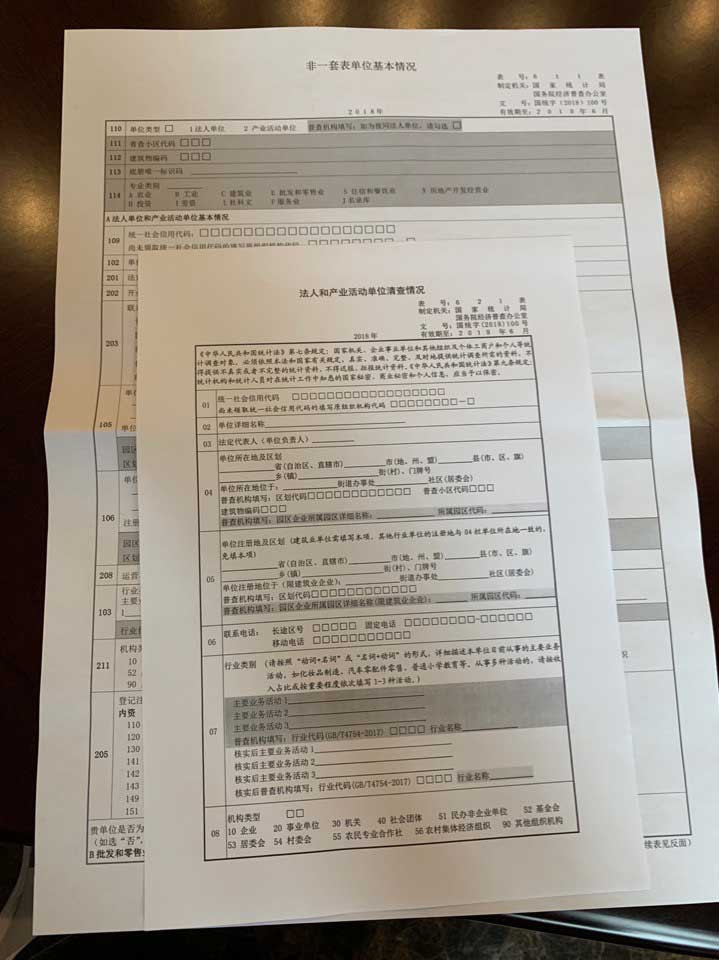
Forms, of course, at first glance, evoke bureaucratic horror. But in fact, everything is much less frightening
In June, it will be extremely interesting to look at the results of the census and compare it with the previous one. Well, that’s all, I hope it was interesting for you to look at the basic building block of statistics, from which the general picture of the PRC economy is then obtained.
Getting information about the results of the census – as well as checking whether your submissions have been reviewed, is also arranged in a completely Chinese way. It is required to subscribe to the public Wechat account of the city statistics committee and do all this in their widget.