Electronic identity cards in the PRC
When back in 2015 I wrote an article about identity cards in the PRC, I believed (and it was not only me) that the next step would be the evolution of the functionality of material plastic cards. However, life has put everything in its place, and now I would like to inform you about what the identity cards have transformed into by now. Or rather, not yet fully transformed, but only moving rapidly in this direction.
As I wrote in my previous article, the link “document number+full name+face recognition” has become a method of identification that is gaining momentum (and is now the main marker). Essentially, with the introduction of electronic IDs, it just took on a more user-friendly shape.
There are a lot of examples of practical implementation of this type of identification. Starting from paying for purchases and ending with border control. But all the same, all these were the developments of individual companies and they were still based on a plastic ID card. The introduction of the electronic one is, in fact, a new stage, because, as everyone understands, it is precisely 身份证 that is the main document of any citizen of the PRC.
But first things first. So, the official name is 居民身份证网上功能凭证 or “Verification function for the identity card of a citizen of the PRC on the Internet”.
On December 25, 2017, the Guangzhou Police Department, Tencent, China Construction Bank and other organizations signed a memorandum of cooperation to develop an identity card based on Wechat (Tencent’s multi-purpose machine-messenger). In December of that same year, several dozen organizations began accepting electronic identity cards for:
- submitted to government agencies for identification
- check in hotels (in certain hotels)
- buying train tickets
In January 2018, Xi’an joined the ranks of the test regions, and the scope of use also began to include:
- boarding a plane
- applying for bank cards
- sending and receiving letters
On April 17, 2018, at a conference in Quzhou, it was announced that Alipay (a payment system from Alibaba) was joining the system.

Now a small lyrical digression.
Tencent and Alibaba are the two pillars that hold the Chinese Internet as an entity. We can talk about other companies, but this will be like the case of iOS, Android and Windows Mobile. For example, here are the statistics of the Chinese mobile payment systems market for 2018.
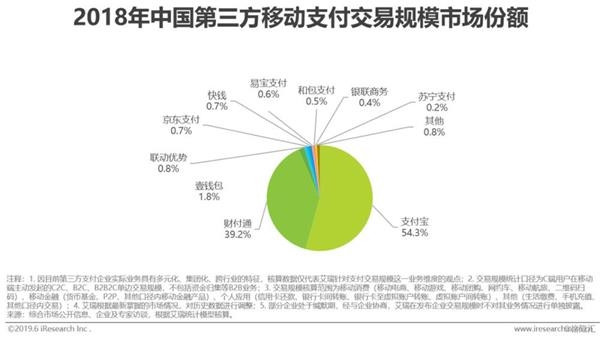
54.3% is Alipay (owned by Alibaba) and 39.2% is Tenpay (Tencent’s payment system, which is used in Wechat, QQ and other Tencent products).
Well, yes, you can write novels about their competition, but we have shifted away from the topic.
On March 27, 2019, under the auspices of the First Research Institute of the MPS of the PRC, all existing developments were combined within one platform with the current name. Or abbreviated as CTID (Cyber Technology ID).
The service developed further, with the last significant update being “真你” (Indeed you), introduced on November 27, 2019. It provides an opportunity, with mutual consent of two interlocutors in Wechat, to verify the identity of the interlocutor (by sending the interlocutor information about the real full name, identity card number and photo).
What is it like? In technical terms, on the part of the user – a QR code (yes, I wrote more than once about the fact that it is immensely loved by the Chinese). The user enters the corresponding Wechat/Alipay interface, scans his face, confirming that it is s/he and shows it to the scanner.
The QR code is dynamic, each time it is generated anew after each opening and confirmation by face biometrics.
On the other side, everything is just as simple. The merchant, having connected to the CTID, scans this code (which is an internal link of the qr.alipay.com/xxx or weixin://dl/xxx format), determines the CTID provider for the user by the link format (as is clear from the above statistics, this will be either Wechat or Alipay) and communicates with the MPS database, which gives it a “1” or “0” confirmation in terms of the validity of the existing document, full name, date of birth, etc. and a number from “0” to “100” in terms of the correspondence of the face biometrics to those in the database. I wrote about the technical details here.
The only difference is that the database provider is not a third-party service provider, but the CTID platform itself.
At the moment, the application supports:
- identification card
- driving license
- social security card
The plans are to expand towards documents specific for Chinese citizens for travel to the SARs of the PRC (I dwelled on the variety of documents in China in detail earlier), full debugging and synchronization with other services.
As of the end of 2018, 213 airports of the PRC were equipped with the corresponding equipment, while at the end of 2019-beginning of 2020 – all airports and most railway stations (cancelling paper train tickets and replacing them with face biometrics was also discussed here).
Some provinces or cities go further and integrate their functions. Electronic marriage certificates already exist in Zhejiang (which along with Guangdong is at the forefront of Chinese progress). In Shenzhen, you can register at a specific address through the Wechat of the city police. And so on.
Naturally, the functionality is available for obtaining a certificate in case of a loss of an identity card and getting a temporary one, as well as many other functions. Alas, as you clearly understand, the functionality is available only for Chinese citizens and I cannot test it myself on my passport.
Actually, this explains the Wechat’s paranoia in terms of registration of new accounts and related policies. For quite a while now, this has ceased to be a mere messenger, or even a messenger with additional functions. This is, as they put it in their motto, a “Lifestyle”.