Payments from Foreign Counterparties in China
This article provides an overview of the methods available for Chinese legal entities to accept payments from foreign counterparties (both individuals and companies) in 2024.
Bank Account
Of course, the first and primary method of payments is a straightforward bank transfer to a corporate account. There's no need to explain much here—corporate bank accounts are opened during the company registration process. The basic account is opened in RMB (Chinese Yuan), and to receive RMB from abroad, the bank requires activation of this function (跨境人民币支付功能). It can also accept other currencies, but these will be converted to RMB at the exchange rate on the day the payment is received. A foreign currency account is required for receiving foreign currencies.
More information about company account types can be found here: link
A foreign currency account is not opened by default. The requirements vary slightly from bank to bank, but generally, one needs to confirm the existence of foreign trade activities (usually by providing a contract and a proforma for the first transaction, plus an explanation of what the company will do). In some banks, the first transaction must be received on the RMB account, after which the foreign currency account can be opened.
The advantages are obvious—this is the oldest, universally accessible, and most versatile method of payment. The industries for which payments can be accepted are not restricted.
Payment Systems and Neobanks
The main topic of this article, which should be explained in detail, as it will be the primary method of payment with China in 2024. It is much more flexible than traditional banks, but it also comes with more restrictions and nuances.
First of all, what distinguishes a payment system from a neobank? A neobank is a fully licensed bank that operates without physical branches, but otherwise, it doesn't differ from traditional banks. They tend to have lower fees due to savings on branch infrastructure. In China, two neobanks stand out: 网商银行 (Wangshang, a neobank from the Alibaba Group) and 微众银行 (WeBank, a neobank from Tencent). The main advantage of these neobanks is full integration with other services within their corporate group. However, in terms of foreign trade, they are no different from traditional banks.
A payment system, on the other hand, is almost like a bank but is licensed to handle a specific set of financial instruments, often limited and regulated. However, these services within the payment system are much more developed.
After several changes in recent years, the People's Bank of China published the latest version of the “Regulations on the Activities of Non-Bank Payment Organizations” on May 1, 2024.
One key nuance to note is that receiving money from a licensed payment system and an unlicensed one is two entirely different processes. Without a license, it's just a regular business transaction between two entities. For example, company A receives money from company B for goods or services provided. However, receiving money from company B, which holds the payment system license, is considered as company A withdrawing its own funds received from its clients.
For example, receiving a payment from Stripe, the Chinese bank will ask for proof of goods or services sent directly to Stripe. However, when receiving a payment from Lianlian, the bank will accept proof of goods or services sent to the actual counterparty, even if the payment was processed through Lianlian.
How to Choose a Payment System
Payment systems operate based on traditional banks. Essentially, each payment system creates an virtual account for you in a particular traditional bank, and your payment details will be generated according to local rules and regulations.
Thus, the first step when choosing a payment system is to analyze which banks in which jurisdictions they open virtual accounts and which countries you'll be receiving money from. For example, if they open accounts in US banks, your account details will have a Routing Number. If they are in the UK, your details will include a Sort Code. It is obvious that it will be easier for your client to pay using local, familiar, and understandable details, rather than using SWIFT. Additionally, domestic transfers are often instant, whereas SWIFT can take several weeks.
Currently, the most popular payment systems (PingPongX, LianLian, WorldFirst etc.) open accounts in more than 40 jurisdictions, so you’ll likely find what you need, especially for USD (US), GBP (UK), or EUR (EU). If you need something rarer, it’s best to check with customer support directly.
The next step is to confirm if the chosen payment system supports your type of business. If you are engaged in B2B commerce, all platforms support this kind of activity. For B2C commerce, for example, PingPongX requires you to connect a store from their approved list (e.g., Amazon, Shopify, etc.), whereas Lianlian allows you to create a store on their site (with mandatory subsequent site review).
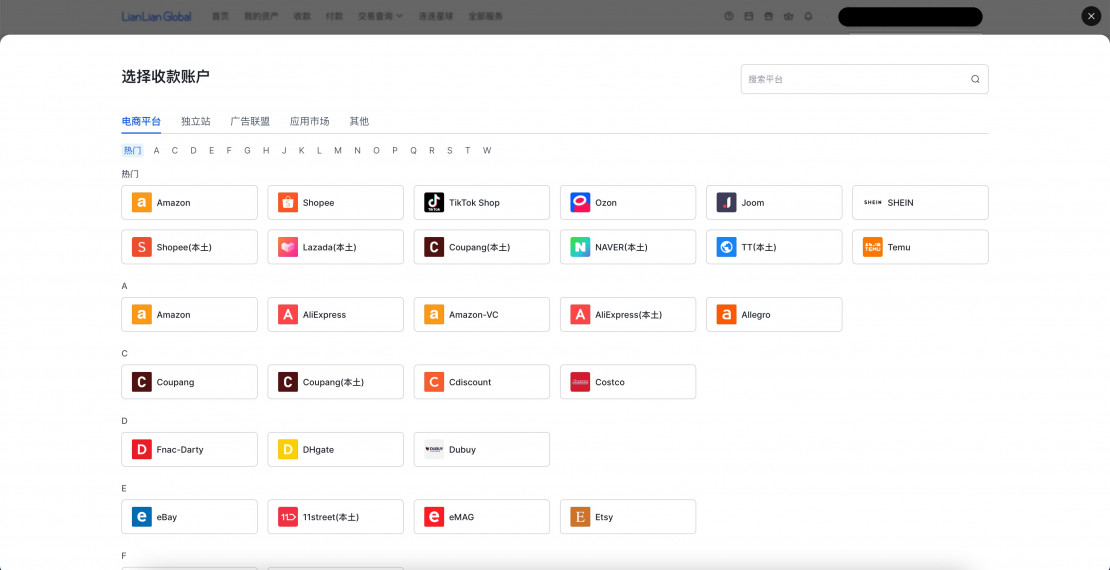 Linking online store with LianLian Global. Just choose one and confirm it in the store admin panel
If you are a developer, WorldFirst will require you to link your Google Play or iTunes Connect account.
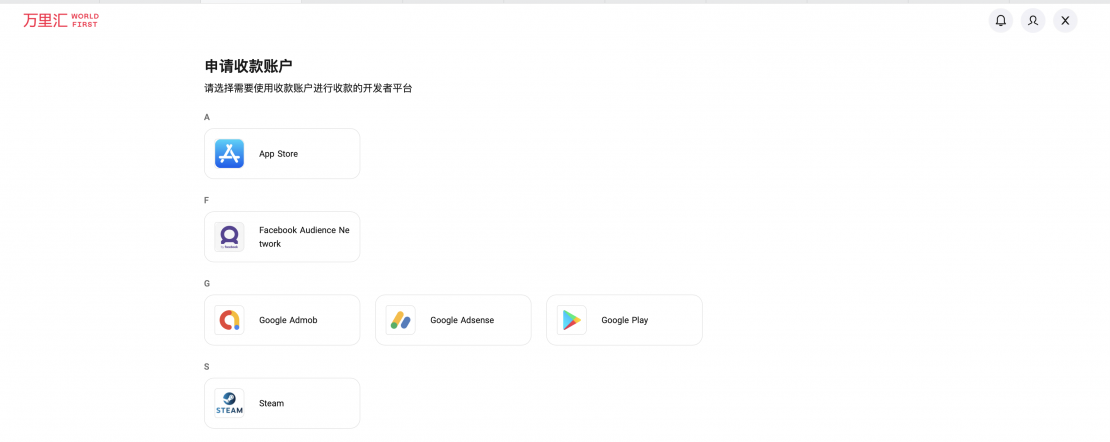 Linking your developer account with WorlFirst. Also requires just few clicks
Many payment systems also have restrictions on what you can do with the funds you receive. For example, Yeepay only allows funds to be withdrawn to a linked corporate bank account. PingPongX allows withdrawals to an account or payments to other corporate counterparties. AirWallex and Currenxie allow using the account as a full corporate account in certain jurisdictions, including paying salaries and social security contributions for employees.
It's also worth diving into the nuances of how the payment system connects offshore (CNH) and onshore (CNY) Yuans, as well as the intricacies of currency control (结汇). There are many nuances, and changes happen almost daily, so the only way to get a specific answer is to contact the customer support of the payment system.
Foreign Payment Systems
As of 2024, the only global payment system (both acquiring and neobanks) that does not work with Chinese legal entities is Stripe, due to their special approach to VAT payment in supported jurisdictions. The rest—Paddle (global card acquiring, #2 in the world after Stripe), Wise (the well-known and oldest British neobank), PayPal (name says for itself), and many others—open accounts for Chinese legal entities and accept Chinese documents without translation. Naturally, there are some nuances related to paperwork, language, translation issues, and the usual bureaucratic misunderstandings, as well as delays in responding to new Chinese regulations (for instance, PayPal registers account names using the Pinyin spelling of the Chinese company name, and changing the name to the English version requires providing a scan of the 外贸备案, which was canceled in 2022). However, generally, there are no big issues.
The advantages are clear—when working with Western markets, it’s much easier to use local tools that everyone is familiar with. The drawbacks are also clear—apart from PayPal, no other payment system currently holds the non-bank payment organization license in China. Therefore, withdrawing funds to China is only possible via a SWIFT transfer to yourself, which raises additional questions with the bank.
Accepting Payments from Individuals
First, let’s mention payment via the well-known Chinese platforms Alipay and WeChat Pay with a linked foreign card. This is very simple for the seller to register and receive funds, but the obvious downside is that very few people outside of China have accounts on these platforms.
The second option is online card payments via UnionPay. This is also easy for the seller, but the same downside applies—few people outside of China have UnionPay cards. However, there are more UnionPay cardholders abroad than there are Alipay and WeChat Pay users.
The third option is Alipay+. For the Chinese seller, it’s just like using regular Alipay, but it’s also easy for foreign buyers, as they can use their local payment system. The downside is that currently, only the Italian Tinaba is connected to Alipay+ from Western payment systems. On the other hand, many Asian payment systems are connected, so if your buyers are from countries like South Korea, Thailand, the Philippines, or Indonesia, this may be the best option. For example, in South Korea, Alipay+ supports KakaoPay, Naver Pay, and TossPay, covering 99% of Korean users.
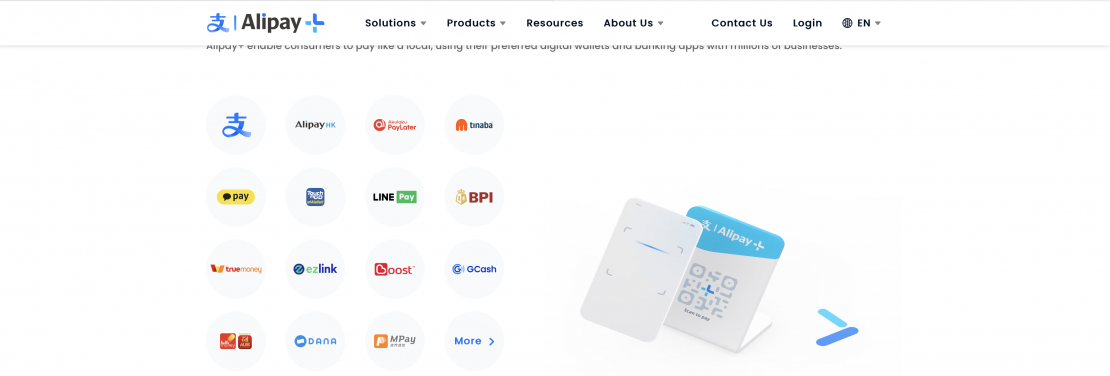
List of local payment methods supported by Alipay+
The fourth option is PayPal, which deserves more attention. PayPal is the only payment system with a license from the People's Bank of China, solving the issue of withdrawing money to a company account. PayPal supports all international cards, is familiar to many users, supports all types of business activities, and has Chinese and American entities (among others), which solves bureaucratic issues. So, Chinese sellers work with Chinese PayPal (no need to explain local rules), while American buyers work with US PayPal (no need to explain local rules).
To start accepting payments from foreign individuals, all you need is to register as a seller on paypal.cn (for Chinese customer support) or paypal.com (for international support) and submit the required documents.
Other options include integrating third-party acquiring services, whether from any of the Chinese payment systems mentioned above or from Paddle or another acquirer that works with Chinese legal entities.
List of Mentioned and Other Payment Systems