VAT refund on export from China
When exporting any product, there are two options for dealing with VAT.
Option 1 – the seller is the same as the exporter. In this case, the seller must receive payment for the goods directly from the foreign buyer (either from a foreign bank account or from an NRA account in a Chinese bank). The buyer pays the export price without VAT (不含税出口价). Having received the money, the seller contacts the customs, and a customs officer visits the factory and writes out 商检单 at the same time as the container/box/car body is sealed on a certain day before shipment (or right at the time of shipment). Even though the goods are still physically located in China and will travel through it for a long time, according to the documents, they are already exported and can no longer be sold in China. Accordingly, at a later point in time, the goods arrive at customs at the border and are exported. Naturally, weight, cost, type, item numbers, quantity – everything must be in accord with the 商检单 issued before leaving the factory.
Option 2 – the seller and the exporter are two different companies. In this case, the seller first sells the goods to the exporter at a price including VAT, on which the seller’s obligations are considered fulfilled (depending on the terms of delivery), whereas the exporter exports the goods on their own behalf, then returning the paid VAT to themselves.
There are, of course, less widespread options when the exporter is located in the free trade zone 自贸区 or in the bonded zone 保税区 and can buy goods for a Chinese company immediately at an export price without VAT, but this is not always the case and not available to everyone. However, if you are only considering opening a company rather than using an existing one, then this is an ideal scenario, combining the advantages of options 1 and 2, with much easier procedures for obtaining of work permits and company registration, with programs to attract investors and exporters through significant benefits and so on.
Each option has a lot of pros and cons, and the majority of these consist in small nuances. The several main differences are as follows
- Under option 1, it is impossible to pay quickly and frequently. At the same time, since, in addition to the value of the goods and the cost of the delivery, the price includes a huge number of small payments, ranging from insurance to the salary of the person checking the goods, all these expenses are included in the payment to the supplier, often at inflated prices. In turn, all this leads to overcomplicated schemes, money in personal accounts and the like.
- Option 1 completely lacks flexibility in both purchasing and shipping. The packing list is made by the supplier, who is absolutely not interested in changing anything in it. If you have a huge amount of a homogeneous product (phone cases – 100,000 pieces), which is selected in such a way as to fill one container, then it is simple and easy. Whereas if you have a consolidated cargo purchased at several factories, with hundreds of items and shipped from five different cities, then it’s easier for you to give up even before you start, since according to option 1 you will never export anything
- For some types of goods, there is simply no export price without VAT. You may find a wonderful supplier that meets all your requirements, but who simply does not want to get involved with all the paperwork required for export, expand the staff, and so on and they immediately declare that they will “only sell within China”
Therefore, option 2 is more convenient in many cases, and sometimes it is the only possible one. In this article, I will consider the VAT refund process when exporting through a trading company.
Why is the emphasis placed on the word “trading”? Because the VAT refund for exporters exists in two forms – for the manufacturer and for the trading company. There is only one difference – while a VAT refund for the trading company only requires to receive a 专票 from the seller (a special invoice implying the further transfer of the paid VAT), for the manufacturer it is necessary to confirm the paid VAT for the entire production process. However, if you have your own factory in China, then you definitely have a better source of information than this article.
Accordingly, for a VAT refund, the trading company must meet the following conditions:
- The seller can provide 专用发票 (special invoice-fapiao) for the purchased goods. This point must be discussed from the very beginning, since the other option 普通发票 (regular invoice-fapiao) is not suitable for VAT refund
- The exporter has an export-import license (外贸备案) and is an ordinary taxpayer (一般纳税人)
That’s it, there are no more conditions. So, the first and only step that depends on the seller is to receive 增值税专用发票. In which all information about the purchased goods and the buyer will be indicated. Naturally, the name of the buying company must be written without typos and errors, the name of the goods must comply with the purchase contract with the foreign company, the units of measurement must match, and so on. Any mistake is correctable, but entails long delays. For example, if you have “quantity – 5” and “unit of measurement – ton” in your fapiao, and “quantity – 5000” and “unit of measurement – kilogram” in the customs invoice, then you, of course, will get the VAT refund in the end but only after a lot of hassle. Moreover, if the fapiao says “5000 kilograms of water”, and the customs invoice says “5000 litres of water”, then despite the fact that these are the same, no one will return VAT to you. And the name. It is best to consult with a customs broker in advance and indicate in the fapiao the name that matches the name in the HS Code up to the last letter. Essentially, this is the crux of the matter – the name and quantity of goods and units of measurement. Besides that, of course, there is the value of the goods, which must be equal to or lower than the value specified in the export contract.
So, you received the fapiao, checked everything and the goods arrived at the border. The customs broker will send you a 预录入单 – a preliminary customs invoice, which contains all the information, for verification. Check everything again. And then double-check. While fapiao can be revoked and changed, once the preliminary customs invoice becomes final, nothing can be altered. The goods left and you should have three documents at hand:
- export contract between the exporter and the buyer – 外销合同
- special invoice-fapiao from the Chinese seller to the Chinese exporter – 增值税专用发票
- customs declaration – 出口报关单
Nothing else is required, you can proceed to handling the formalities. And just a little note.
In fact, the entire VAT refund process boils down to obtaining confirmation from the tax office about the paid VAT and from the customs about the export of goods. However, there are dozens of interfaces and programs for handling these formalities. You can do it directly on the website of the tax office and customs. You can purchase any accounting software with VAT refund plug-ins. You can, like us, use a unified service 单一窗口(Single Window). All of them, effectively, are just varying wrappers for the same process and almost do not differ. But since we are using the Single Window, I will continue elaborating on this example.
First of all, please cast a look at the full name of the fapiao. If the seller keeps up with the times and issues electronic (电子发票) or blockchain (区块链发票) fapiao, then the first step can be skipped. If they represent the old school and their fapiao is ordinary, then let’s proceed to step 1.
Step 1. Fapiao Confirmation
It is required to log in to your personal account on the local tax office website and from the list of fapiao issued for your company, select those for which you need to make a VAT refund and send them for verification. If the fapiao does not appear in the list, this means that the seller made a mistake when issuing it and it needs to be corrected. Or upload manually one at a time, if you are sure of the correctness of the data.
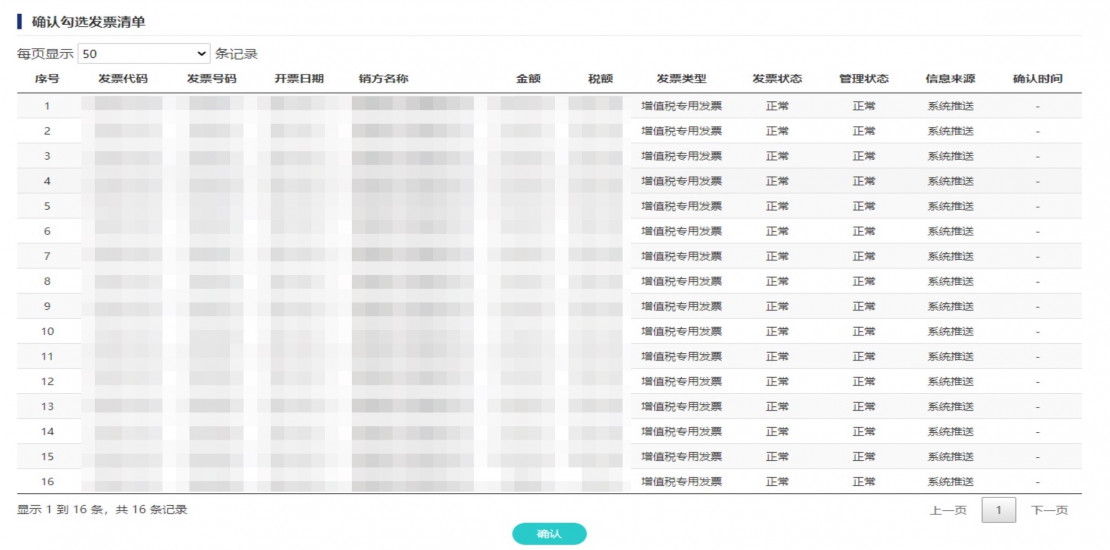
After confirmation, depending on the level of trust from the tax authorities in your company (companies of levels 1 and 2 need only confirmation, 3 and 4 – confirmation and verification), the fapiao will have three statuses
- 未认证/未稽核 – not confirmed/not verified
- 已认证/未稽核 – confirmed/not verified
- 已认证/已稽核 – confirmed/verified
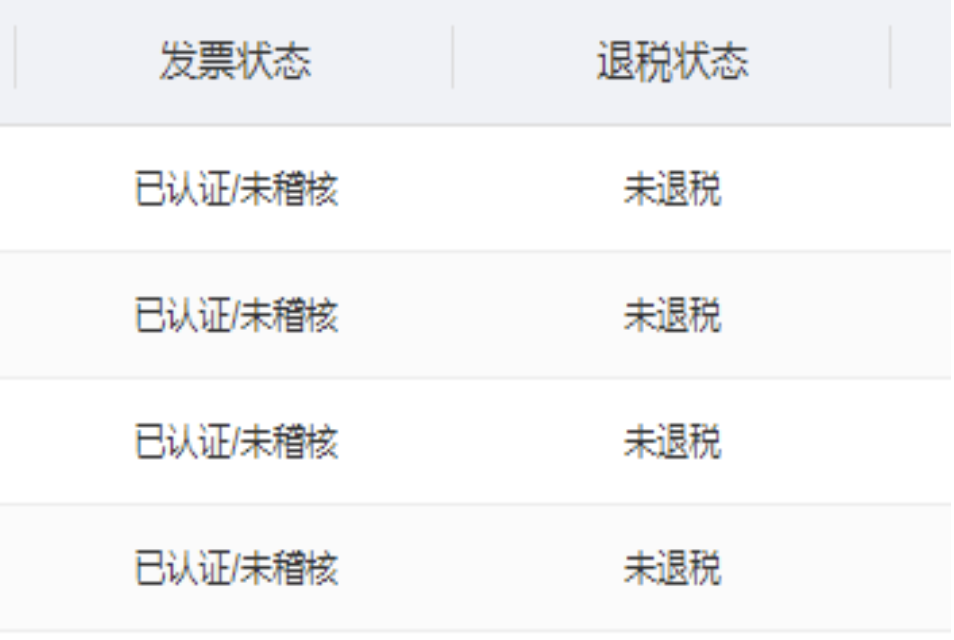
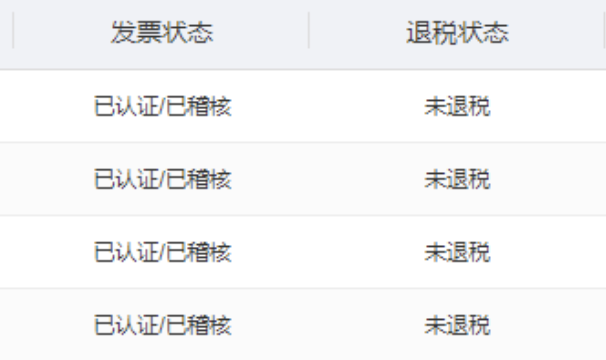
After the status “confirmed / verified” is obtained, you can proceed to the next step
Step 2. Uploading Documents
After logging into Single Window and going to 标准应用-退税(外贸版) – standard applications – VAT refund for trading companies, we will see something like this
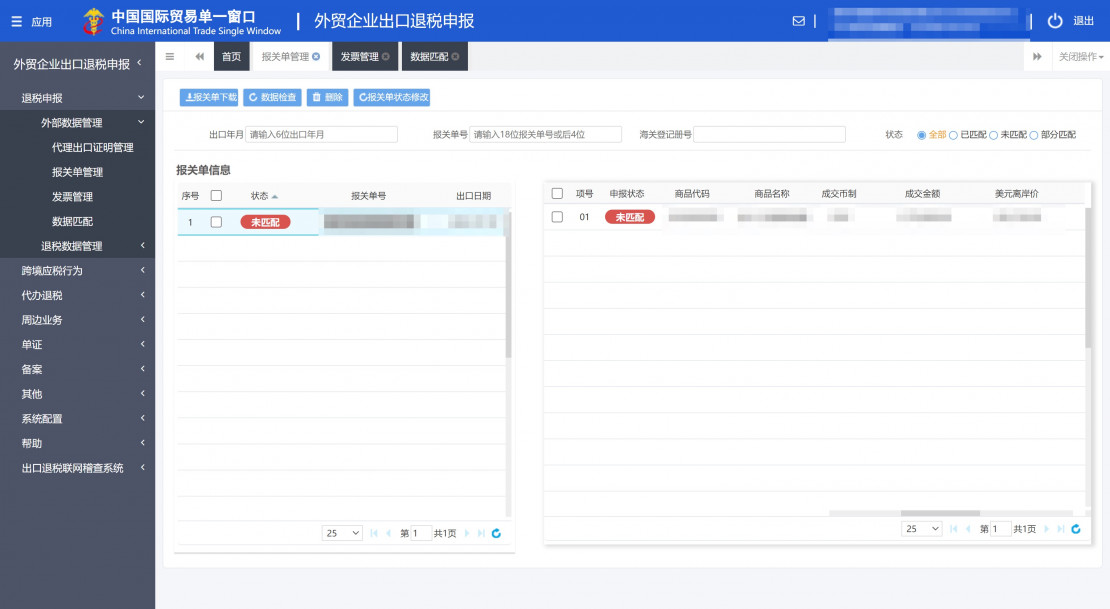
We are only interested in the first item – 退税申报 (VAT refund application). The first sub-item is skipped for intermediary companies, and at the second item is 报关单管理 – management of customs declarations, we download the declaration we need from the customs website using the number of the customs invoice.
We upload all the fapiao received from the seller (no need to upload the scans, only the number).
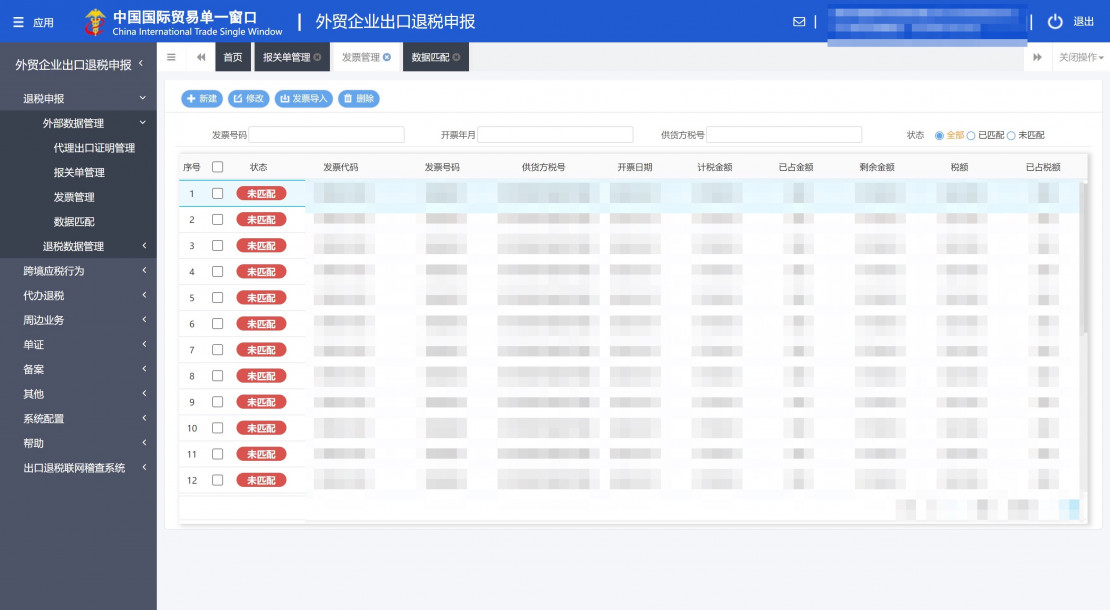 Here it is worth making a small remark. Each fapiao has two numbers – 发票代码 (code number) and 发票号码 (sequence number). One code number may include several sequence numbers. Relatively speaking, when you have bought the goods for 100 yuan, there will be one fapiao, with one code, let’s say – 12345. But how many sheets there will be in it depends only on the seller and the way it is more convenient for them. Maybe it will be one sheet with code 12345 and number 100 in the amount of 100 yuan. Maybe there will be ten sheets with the code 12345 and the numbers 100, 101 ... 110. This does not affect anything at all, probably except for the uploading speed.
Step 3. Reconciliation and Verification of Data
Having uploaded and checked everything, you can proceed to the next item – verification.
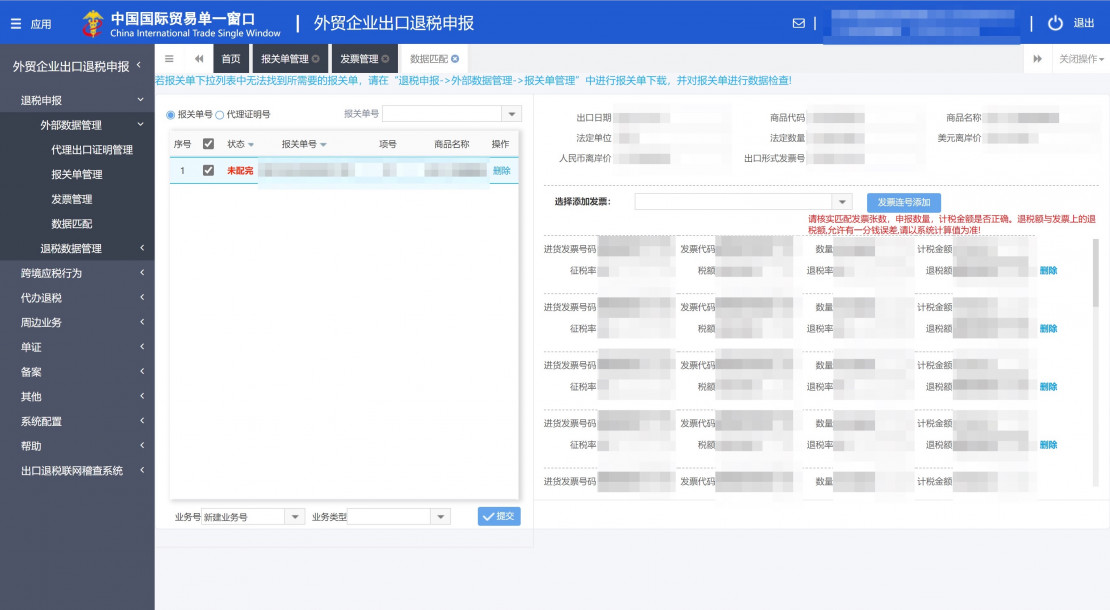
And, if everything coincides, get the following result, saying that everything is checked and matches.
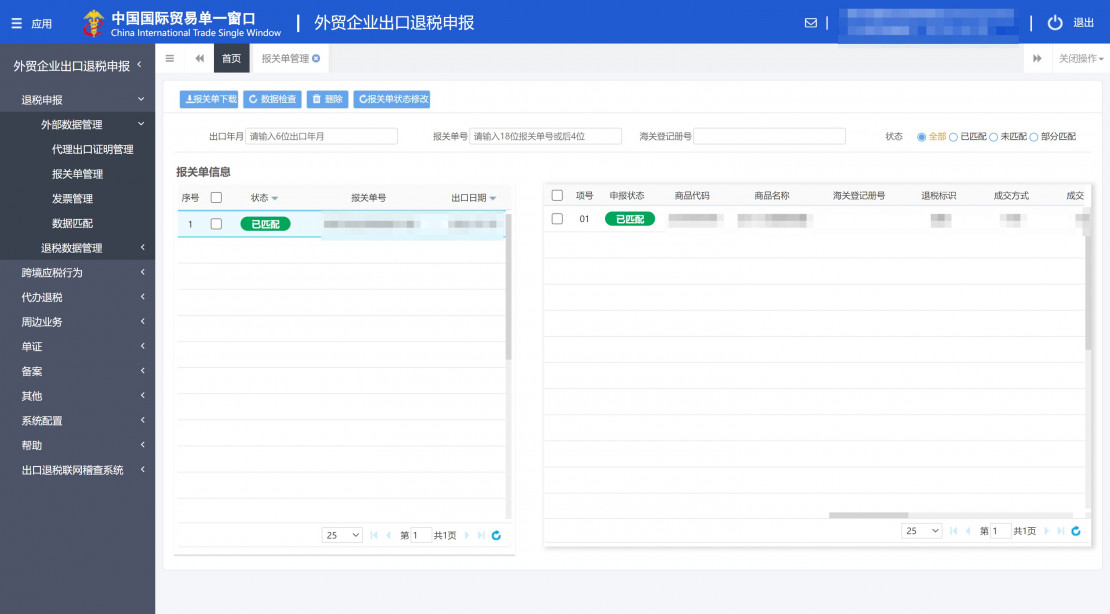
If you have reached this step, then everything, in principle, has already been done, and then you can proceed according to the principle of installing software “Next” – “Next” – “Next” – “Finish”. Submit for automatic verification 自检.
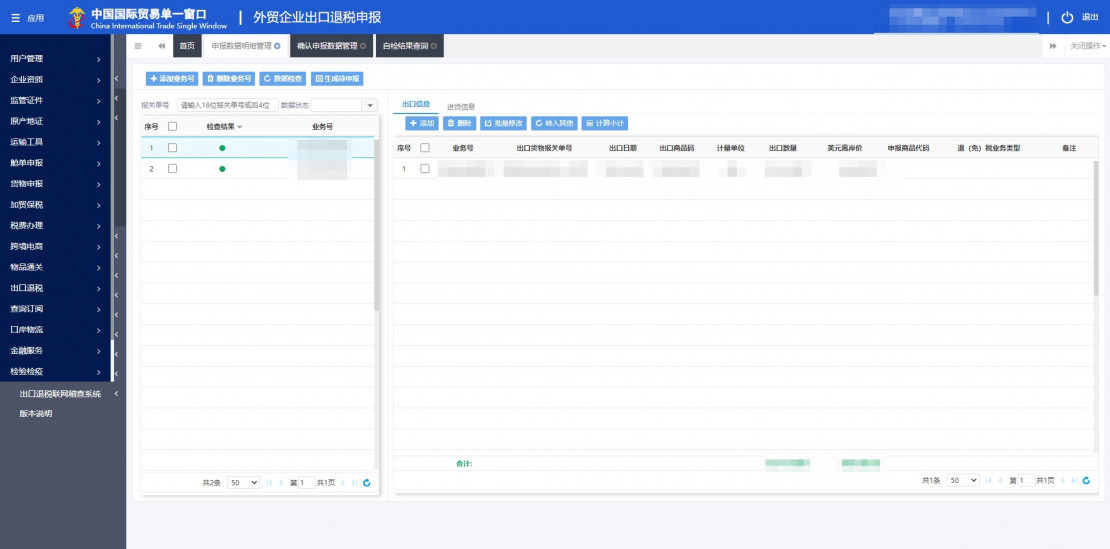 And send it directly for approval. The status “in verification” will change to 发放 (payment) and all that remains is to wait for the money to be credited to the account.
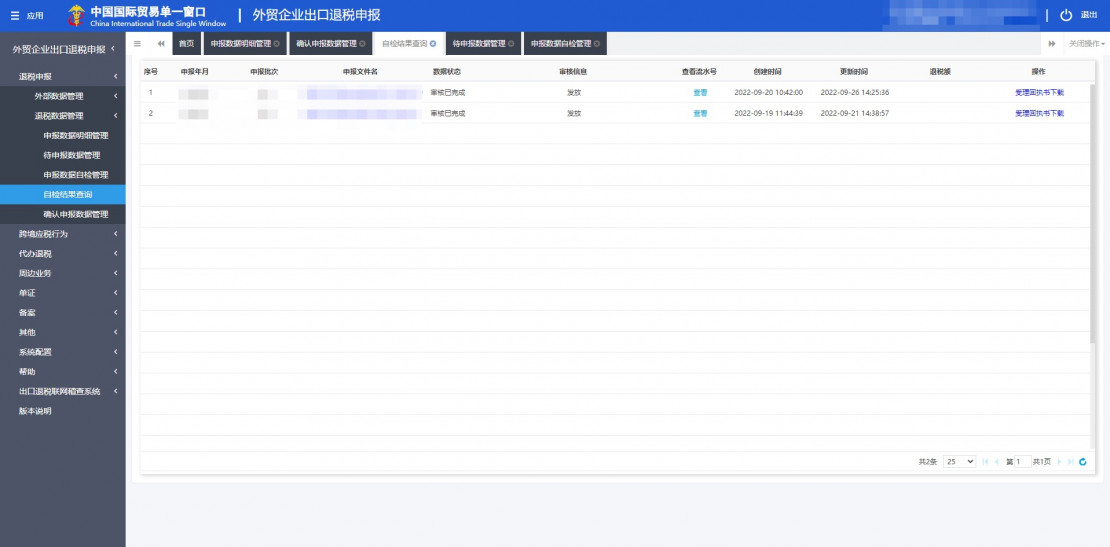
As you can see, the first time the check took six days, while the second time it took two days. Money is paid as luck would have it – from one day to six months, depending on the workload of the customs and the tax office.
As you can see, this is as easy as pie. If you keep a close eye on the documents and you have a complete set in which everything matches (export contract, fapiao, customs invoice), then there is just no room for error.